Airways:
Objects are often swallowed by children and can either enter the airways or get stuck in the throat.
Actions:
- Stay calm.
- Watch for signs of the child struggling to breathe, frequent coughing, or a persistent urge to cough.
- Hold the child head down with their upper body resting on your forearm and give a few back blows between the shoulder blades.
Infants:
- Hold the infant with the head facing down. The foreign object cannot be removed unless the baby is in this position. You can hold the infant securely on your lap, either sitting or on your knees.
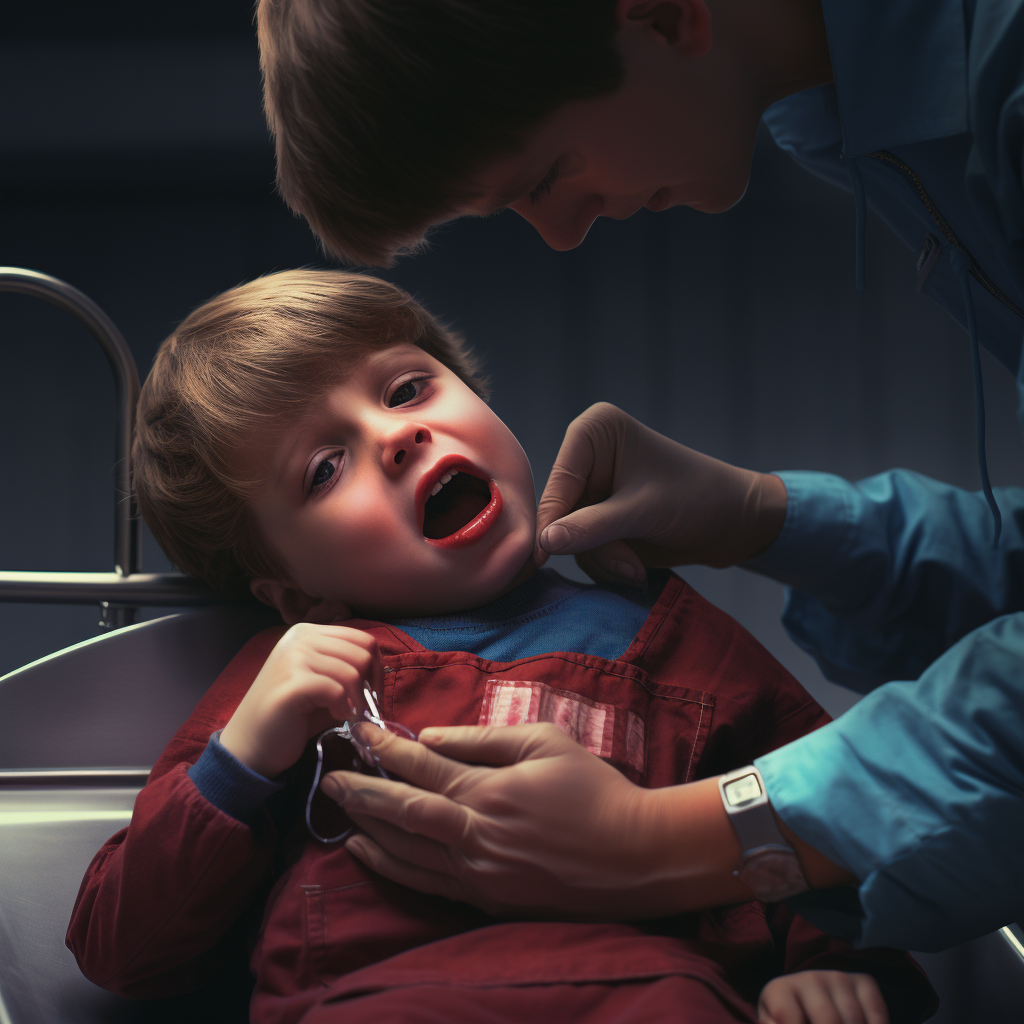
- Support the infant’s head by placing your thumb under the chin and your fingers on the opposite side of the jaw.
- Avoid applying pressure to the soft tissue below the chin. Then, deliver back blows between the shoulder blades to expel the object from the windpipe.
Larger Children:
- Stand behind the child and place both hands around the upper abdomen.
- Make a fist with one hand and position it between the bottom of the sternum and the belly button.
- Use the other hand to grasp the fist and pull it sharply inward and upward. The child should lean slightly forward during the procedure.
- This maneuver increases pressure to help expel the foreign object.
- If the object is expelled and the child can breathe and swallow again, the immediate danger is over.
- If in doubt, take the child to the nearest pediatrician or hospital or call emergency services (112).
Warning! Sometimes a child can still breathe despite having a foreign object in the airway. If you’re unsure, seek medical help immediately or call emergency services (112).
Foreign Body in the Esophagus or Digestive Tract:
Most swallowed objects will pass through the digestive system without issue. If an object becomes stuck in the esophagus or digestive tract:
Actions:
- Stay calm and reassure the child.
- Does the child feel strange in the throat?
- Is the child experiencing nausea, vomiting, or frequent swallowing?
If the child is experiencing these or similar symptoms, take them to the nearest pediatrician or hospital or call emergency services (112).
If the child has no symptoms after swallowing an object, ask a pediatrician or hospital if there is any risk to your child.